
Playful Literacy Activities
Overview
Playful activities can support the development of learners' Metacognition and also inspire their narratives and writing. A creative task helps students brainstorm and develop their ideas prior to engaging deeply in the writing process, easing the demand on Working Memory.
Example: Use This Strategy in the Classroom
Design It into Your Product
Factors Supported by this Strategy
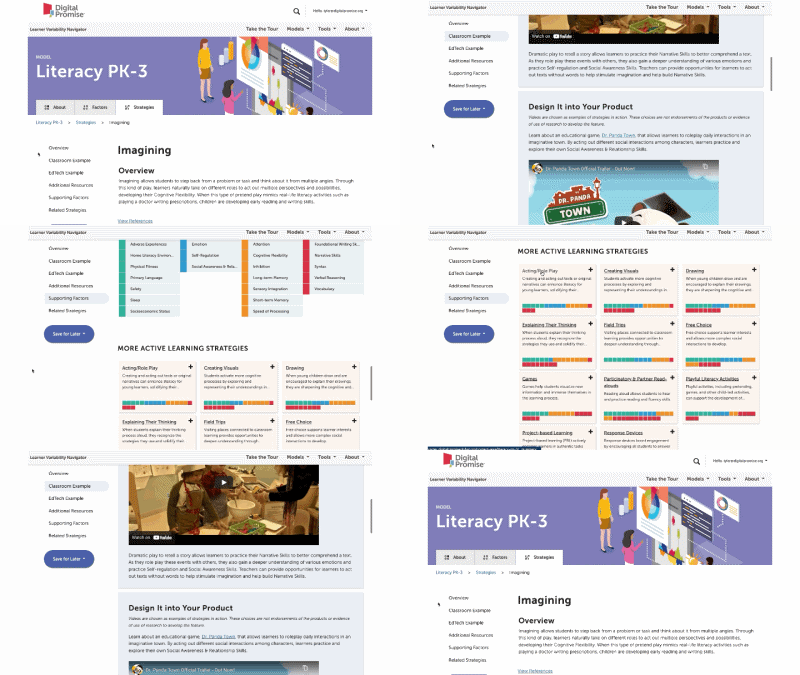
More Active Learning Strategies
Physically acting out a text enhances reading comprehension.
Expressing ideas through visuals and audio, and understanding others' ideas in these forms, is as critical in today's world as traditional reading and writing.
Students activate more cognitive processes by exploring and representing their understandings in visual form.
When students explain their thinking process aloud, they recognize the strategies they use and solidify their understanding.
Visiting places connected to classroom learning provides opportunities to deepen understanding through firsthand experiences.
Games help students visualize how to connect one fact to another.
Project-based learning (PBL) actively engages learners in authentic tasks designed to create products that answer a given question or solve a problem.
Response devices boost engagement by encouraging all students to answer every question.